Divine Goddess Lakshmi Tanjore-Style Art
A symbol of wealth, prosperity and spiritual grandeur.
This magnificent representation of Indian devotional art, traditional craftsmanship and spiritual symbolism portrays Goddess Lakshmi seated gracefully on a richly decorated golden throne, expressing divine grace and symbolising good fortune, prosperity, wisdom and blessings.
A regal devotional composition
The composition showcases rich shades of gold, red, green and royal blue, complemented by intricate ornamental details, pearl-like embellishments, floral decorations and a magnificent circular border.
The symmetrical arrangement of elephants, attendants, decorative pillars and the elaborate throne creates a regal atmosphere inspired by traditional Indian temple art.
With its luxurious appearance and devotional significance, this artwork is an impressive addition to spiritual art collections, home temples, traditional interiors and cultural exhibitions.
The jewelled crown and serene expression.
The divine beauty of Goddess Lakshmi
At the centre of the artwork sits Goddess Lakshmi, widely revered in Hindu tradition as the goddess of wealth, prosperity, fortune and abundance. Her serene facial expression conveys grace, compassion and divine benevolence.
She is adorned with an elaborate crown, traditional jewellery, colourful garments and beautifully detailed ornaments. The intricate decorations around her face and body highlight the richness of the composition while drawing attention to her divine presence.
Her seated posture conveys dignity, stability and tranquillity. The floral elements surrounding her add softness to the elaborate golden design, creating a harmonious balance between spiritual symbolism and decorative beauty.
Goddess Lakshmi is traditionally worshipped for blessings associated with material well-being, generosity, happiness and spiritual prosperity. Her central position in the painting reinforces these auspicious associations.
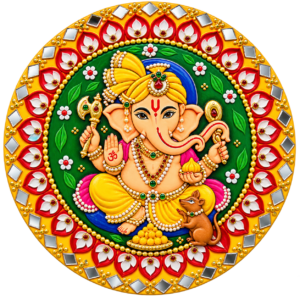
The goddess seated at the centre, adorned with crown, jewellery and lotus garlands.
Decorated elephants with raised trunks and golden detailing.
The symbolism of elephants
Two beautifully decorated elephants stand symmetrically on either side of the goddess. Their raised trunks, ornamental coverings and golden detailing create a sense of grandeur and celebration.
In Indian art and Hindu traditions, elephants are often associated with strength, wisdom, royal dignity and auspiciousness. Elephants also appear in depictions of Gajalakshmi, a traditional form of Goddess Lakshmi associated with abundance and royal prosperity.
Their balanced placement creates visual symmetry and enhances the ceremonial appearance of the composition. The green, red and gold decorations on the elephants complement the surrounding architectural elements.
These graceful elephants enhance the artwork’s royal charm, conveying prosperity, honour and the promise of fortunate new beginnings.
The ornate golden throne and temple architecture
The goddess is seated on an elaborate throne featuring richly decorated armrests, carved-looking details and layered ornamental patterns. The surrounding pillars and arched structure evoke the grandeur of traditional Indian temple architecture.
The golden surfaces create a sense of richness, while the deep-blue background makes the decorative elements stand out. Arches, columns and intricate borders frame the goddess and direct the viewer’s attention toward the centre.
The throne symbolises dignity, authority and divine presence. Its elaborate design reflects the artistic tradition of representing sacred figures within magnificent architectural settings. The overall composition resembles a miniature devotional shrine, bringing together temple-inspired design and ornamental painting.
The arched temple frame with its golden crest.
The stepped golden base of the throne.
The significance of the attendants
Two female attendants are positioned near the lower sides of the throne. Their graceful poses, traditional clothing and hands joined in reverence bring a sense of devotion and sacred elegance to the artwork.
Their symmetrical arrangement reinforces the balanced composition and highlights the central importance of Goddess Lakshmi.
The attendants also add human detail to the scene, creating a sense of reverence and ceremonial devotion. Their colourful garments complement the goddess’s attire and the surrounding golden ornaments.
An attendant with hands joined in reverence.
Colours and their symbolic meaning
The painting uses a rich colour palette inspired by traditional Indian devotional aesthetics.
© Sneha Kalakriti Art Gallery